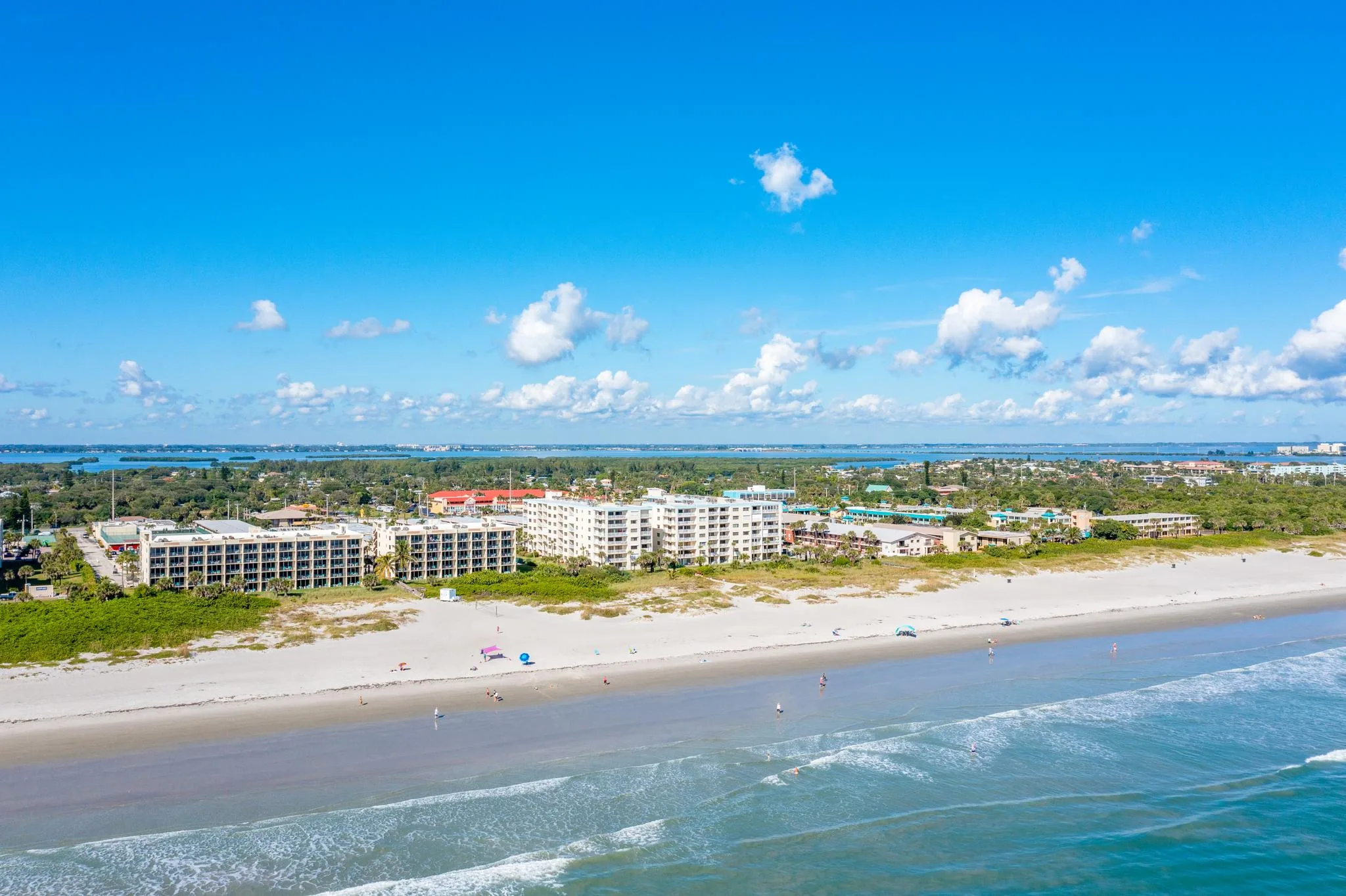
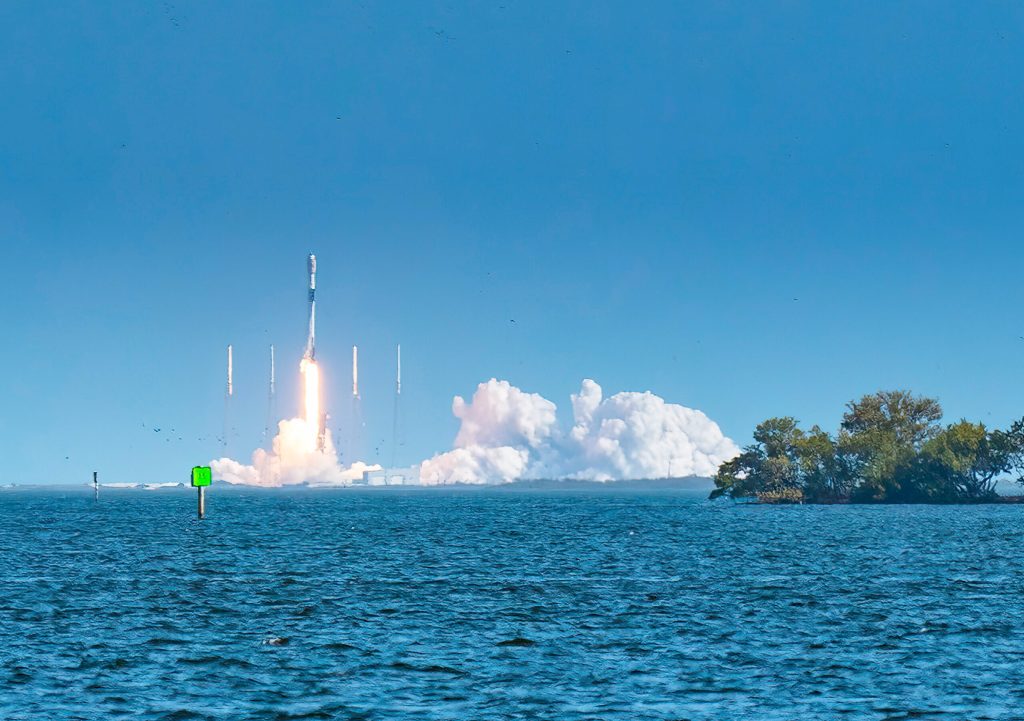
Kennedy Space Center · 12 Miles Away
SpaceX Falcon 9s, Falcon Heavies, and NASA missions all lift off from Kennedy Space Center — visible right from your Sandcastles balcony. Live countdown below. No ticket required.
Next Cape Canaveral Launch
Live Data · Launch Library 2
All times in your local timezone. NET = No Earlier Than — launches can move.
Launch data: The Space Devs Launch Library 2
T+ Timeline
A typical SpaceX Falcon 9 mission compresses an extraordinary amount into the first ten minutes. Here's what to watch for from your balcony.
The sonic boom from a booster landing arrives 6–8 minutes after liftoff — you'll hear it before you see landing confirmation on any stream.
Engine ignition and launch. The plume is visible within seconds — look northwest toward LC-39A or SLC-40.
Maximum aerodynamic pressure. Engines throttle down briefly — you may notice the exhaust plume change shape.
Main engines cut off, first and second stage separate. The booster begins its flip and coast back toward Florida.
RTLS missions — the booster lands at Landing Zone 1 or 2 at Cape Canaveral. A bright re-entry burn is visible before landing, followed by a double sonic boom.
Drone ship missions — the booster lands on a ship ~400 miles downrange. You won't see it, but the stream will confirm.
The drone ship sails back through the Port Canaveral jetties — visible from shore. See tracking guide ↓
SpaceX Vessels
After landing a booster at sea, SpaceX's drone ship A Shortfall of Gravitas (ASOG) tows the booster back to Port Canaveral. The return voyage takes 2–5 days. When it passes through the jetties, it's a 300-foot ship with a rocket standing upright on its deck — absolutely worth watching from shore.
Drone ship landings happen 400–600 miles off the coast. ASOG travels at roughly 10–12 knots, so plan on:
Ships often arrive early morning (5–8 AM) to align with favorable tide windows through the port channel.
No published schedule exists — the transit timing depends on sea conditions and port traffic. Your best sources:
Once ASOG is within 12–18 hours of port, the @SpaceXFleet account typically posts an ETA.
Global AIS vessel tracker. Search "A Shortfall of Gravitas" or zoom into the Atlantic east of Cape Canaveral to find ASOG in real time.
Open Map ↗Community-built tracker for all SpaceX ships. Shows ASOG, recovery tugs, fairing ships, and support vessels with voyage history.
Track Fleet ↗Automated account that posts every significant vessel movement, port arrival, and departure. Follow this for text alerts on your phone.
Follow ↗The port's official account announces major vessel arrivals. Less frequent than @SpaceXFleet but official confirmation when the ship docks.
Follow ↗The ship passes through a narrow channel — these spots put you right on the water.
Best Spot · Jetty Park
400 E Jetty Rd, Cape Canaveral. Right at the port entrance — the ship passes within 200 feet. The jetty walkway gives you an unobstructed view of the entire channel. Arrive 30–60 min before the expected arrival. Parking lot opens at 7 AM.
North Side · Freddie Patrick Park
On the north bank of the Port Canaveral inlet. Less crowded than Jetty Park, still a direct sightline across the channel as ASOG enters port. Free parking.
Waterfront Dining · South Side
Three waterfront restaurants along the south bank of the port — Grills Seafood Deck, Rusty's Seafood, and Fishlips Waterfront Bar. Order breakfast or lunch on the deck and watch ASOG glide past with a rocket on its back. Open as early as 7 AM.
Viewing Spots
Nothing beats staying right here on the Space Coast. Ranked by proximity to the pads.
Best Way to Watch
Stay on the Space Coast · 12 mi from KSC
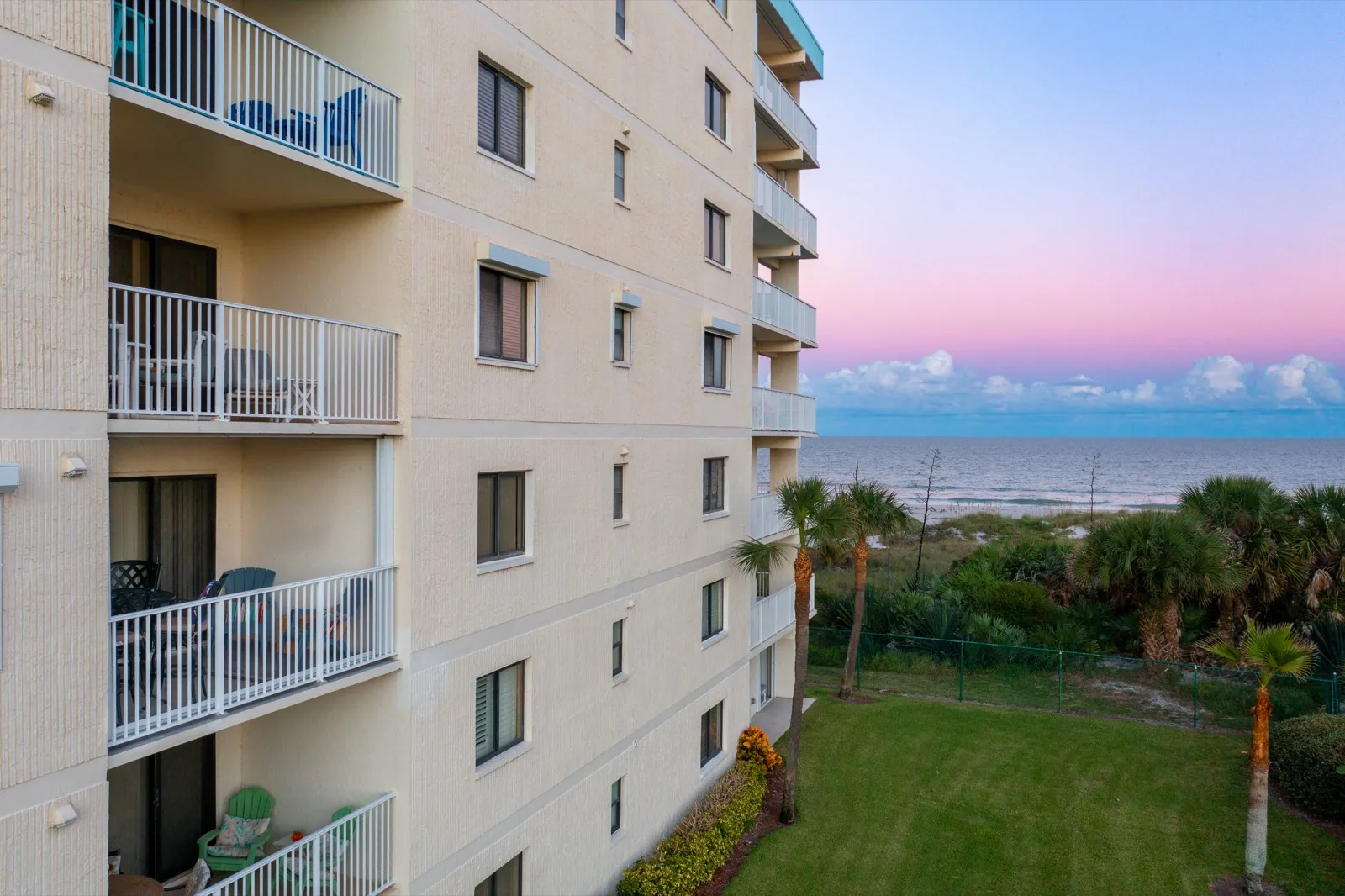
The ultimate rocket-watching setup: roll out of bed and step onto your oceanfront balcony. No parking, no crowds, no scramble — just an unobstructed sightline to LC-39 and SLC-40, day or night, from your own private terrace.
Find a property →
Free · Cocoa Beach Public Beaches
The entire Cocoa Beach shoreline faces directly north toward the launch pads. Walk to the sand and look up — wide open sky, zero obstructions. Free public beach access with parking at Sidney Fischer Park (2200 N Atlantic Ave), Lori Wilson Park (1500 N Atlantic Ave), and street parking along N Atlantic Ave near the building.
Short Drive · Jetty Park, 6 miles north
The closest public land to the launchpads outside of KSC itself. Spectacular unobstructed view of both LC-39A and SLC-40 across the water. Free parking, beach access, and a pavilion. Arrive 30–45 min early for popular missions.
Official Viewing · KSC, 12 miles
Paid launch viewing tickets place you at the Apollo/Saturn V Center lawn — bleacher seating right on Banana Creek, 3.9 miles from the pad, with live countdown commentary. Worth it once, especially paired with a full day at the complex.
Easy Walk · 1 mile south
Walk or drive 1 mile south to the iconic 800-foot pier. Step to the end and you're standing over the Atlantic with a clear northwest sightline toward both launch complexes — no buildings, no trees. Bars and restaurants on the pier make it a great pre-launch hangout. Parking lots along Meade Ave.
Locals' Pick · SR-528 Bridges, 8 mi
The Beachline bridges over the Banana River put you just 8–12 miles from the launchpads with an unobstructed water view — one of the closest free public spots to the pads outside KSC. Pull into a legal shoulder pulloff before the bridges. A favorite among locals who know the Space Coast. Best for SLC-40 and LC-39 missions.
Things to know before the countdown.
Weather, technical issues, and range conflicts cause delays. Always treat a launch date as tentative and check the countdown above 24 hours before your viewing plan.
Download Space Launch Now or follow @SpaceX and @NASA_Kennedy on X. You'll get real-time scrub and reschedule notifications immediately.
If there's a night launch during your stay, rearrange your evening around it. The engine glow lights up the Atlantic, reflects off the water, and the shock wave arrives seconds later.
Use a tripod. Night launches: ISO 800–1600, f/4–5.6, 2–4 sec shutter. Day launches: burst mode at 1/2000s. Your phone's video mode actually captures the arc and sonic boom better than photos.
If the booster lands at Cape Canaveral (RTLS mission), expect a double boom 6–8 minutes after launch. It's louder than you expect. Windows rattle. It's completely normal — and honestly incredible.
For popular missions, arrive 45–60 minutes early. Parking fills fast. Some guests rideshare to Jetty Park and walk back along the beach. Rideshare availability can be spotty after launches.
Plan Your Trip
SpaceX, ULA, and NASA publish upcoming launch windows months in advance. Plan your trip around a Crew Dragon, Starlink, or rare NASA science mission.